Evening sauna and sleep: what warmth can—and cannot—promise
What sauna users report, what warm-bath studies actually tested, and how to leave room for a calmer evening without promising better sleep.
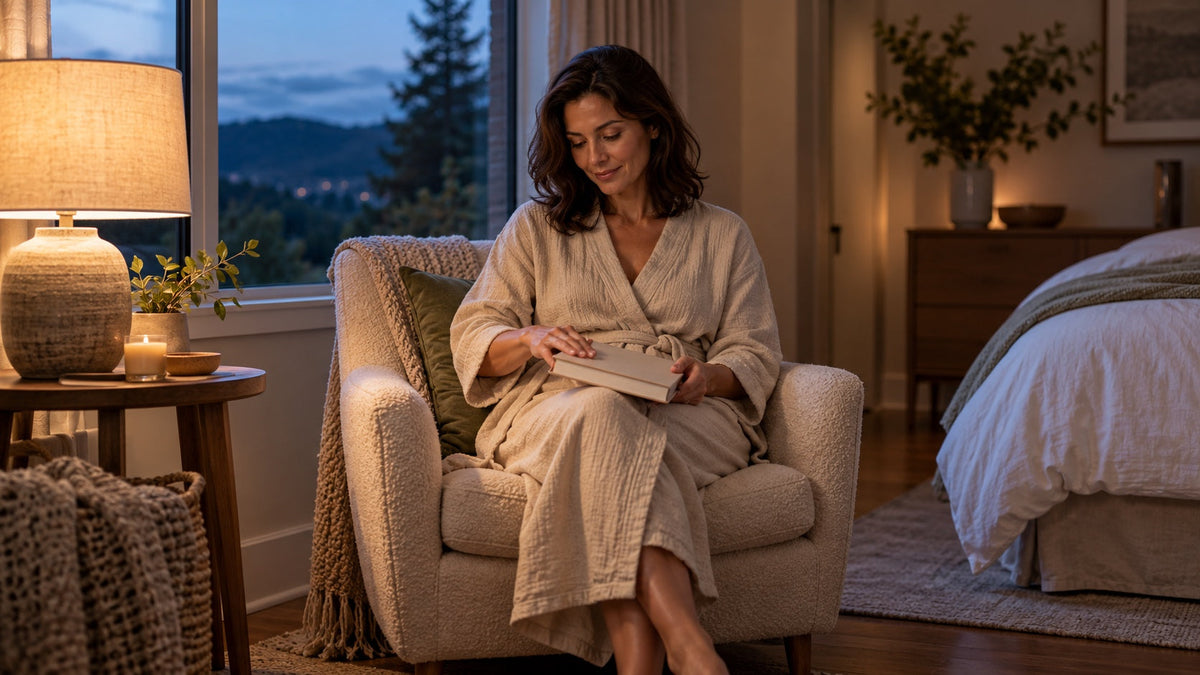
There is an appealing sequence to an evening built around warmth: step away from the day, sit somewhere quiet, then return to a cooler room. Many sauna users describe that transition as relaxing. Whether it improves sleep is a more specific question, and the research needs a careful reading.
Warmth can be part of a pleasant evening without becoming another performance target. You do not need to chase a temperature, earn a sleep score or turn bedtime into an elaborate protocol.
What sauna users report
In the Global Sauna Survey, published in 2019, 83.5% of 482 respondents reported sleep benefits after sauna use. That is an interesting account of people’s experiences, but it was an online survey, not a controlled experiment. Participants chose to respond, and researchers did not randomly assign them to sauna or no sauna. The result cannot establish that sauna caused better sleep. Read the original sauna survey.
The distinction matters when shopping. “People say they sleep better” is a different claim from “this sauna treats insomnia.” An enjoyable wind-down is a reasonable personal goal; a guaranteed sleep outcome is not something a product photograph or testimonial can establish.
Why you hear about warmth before bed
A 2019 research review examined warm showers and baths before bedtime. It found improvements in several sleep measures, including how long it took to fall asleep. Warming scheduled one to two hours before bed was associated with shorter sleep onset, although the evidence on the best timing was limited. The authors discuss the subsequent loss of body heat as a possible explanation. Read the bathing and sleep review.
Those findings concern water-based warming. They do not establish an identical sauna temperature, session length or timing. It is reasonable to be interested in the broader idea of warmth followed by cooling down. It is not reasonable to turn a bath study into a precise sauna prescription.
Build an evening that leaves room for sleep
If sauna already suits you, consider where it fits without pushing bedtime later. Work backward from when you want to sleep. Leave time for the session, a comfortable transition afterward and the ordinary things you still need to do. A ritual that cuts into your sleep opportunity defeats its own purpose.
For example, someone who wants to be in bed at 10:30 might put sauna before the final part of the evening, rather than begin warming up at 10:15. This is a scheduling example, not a medically tested sauna timetable. Your comfort, the product’s instructions and any individual medical advice take priority.
Keep the surrounding routine straightforward. The National Heart, Lung, and Blood Institute recommends regular sleep and waking times, a cool, dark, quiet bedroom and a relaxing wind-down. It also advises avoiding caffeine and alcohol close to bedtime. A sauna does not cancel out those basics. See the NHLBI’s sleep guidance.
Notice how you respond, without overanalyzing
For a week or two, make a brief note the next morning: when you used the sauna, whether you felt settled afterward and how rested you feel. Compare evenings that are otherwise reasonably similar. A late meal, a stressful deadline or a different bedtime can make the comparison difficult.
You are looking for a useful personal pattern, not proving a treatment effect. If sauna leaves you energized, you may prefer it earlier in the day. If you enjoy it in the evening but find the routine rushed, move it earlier or simplify what comes after it. There is no need to force a nightly schedule.
A practical measure of success is whether the evening feels easier to repeat. Can you put work aside? Do you have time to cool down comfortably? Are you still getting to bed when you intended?
When the problem is more than a busy evening
Persistent difficulty falling or staying asleep deserves attention beyond a wellness routine. NHLBI identifies cognitive behavioral therapy for insomnia, or CBT-I, as the usual first treatment option for long-term insomnia. A clinician can help you understand the cause and appropriate care. Learn about insomnia treatment.
Enjoy sauna for the experience it gives you. Let better evenings be something you observe, rather than a promise you feel obliged to achieve.